Empathology: The Study of Surrogate Suffering
by 
by
She was wearing a little blue tee shirt, and had the adorable, scraggly blonde hair of one far too busy enjoying childhood to bother with such trifles as hairbrushes. She would have been 3 or 4 years old…5 at the most. I never saw her smile. What first alerted me to her presence in the restaurant was her cry of anguish. My best guess is that she had relinquished her two shiny coins to the candy claw machine, but no candy had come out. “Play until you win”, the machine with the flashing lights had promised, yet it greedily devoured her coins and gave no return. The injustice was too much for her tiny heart. She ran off to find support…Mommy followed her to the machine. “I wanted candy,” she sobbed to her mother, “it didn’t give me anything!” (This was a sore lament, not a sour complaint.) She was incredulous. She was howling. She was utterly inconsolable. “See?!” she wailed, as she once more endeavored to command the obstinate machine. Fresh tears flowed over another failed attempt. She cried and cried until her mother took her away to calm down.
I didn’t know the child. Maybe she was being overdramatic. Maybe she was getting a little too loud. Maybe she was having what some would call a tantrum. I can’t say for sure…but I’d like to think I can tell the difference between an entitled brat and a heartbroken little girl. One thing I do know: her cries tore through my soul like the rending of heaven and earth. If I listen closely, I can still hear the sound of her precious voice. That vulnerable little girl made a deep impression on me that day. It might sound silly, but I went home that night and I wept. And I wept. And I wept. I never knew her name, but I’ll always remember her pain. Because I felt it.
If you are a bit of an empath—that is, one who keenly feels another’s emotions as if they were your own—you can probably relate to this experience. Now, let me set the record straight: there is a certain usage of the term “empath” associated with psychics, mediums, new-age religion, occultism, and the like. This is not the kind of “empath” I am speaking of, nor do I place any stock in such so-called powers. When I say empath, I am only referring to a person with hyper-empathy, or, in other words, someone whose sensitivity to the feelings of others is above-average.
Alfred Adler, a 19th century psychotherapist, put it this way:
❝Empathy is seeing with the eyes of another, listening with the ears of another, and feeling with the heart of another.❞
Some people have no empathy. Some people have empathy…and wish they didn’t. Empathy is a gift, but it can be quite painful and even crippling if not given healthy boundaries. One simply cannot carry the burdens of the whole world in their heart. There has to be a balance between holding space for the emotions of others, while also protecting your own peace of mind. So in this month’s article, Empathology: The Study of Surrogate Suffering, I am going to be sharing three distinctions between healthy and unhealthy empathy. My tenderhearted friend, I want you to keep feeling, without falling.
Firstly, healthy empathy means…
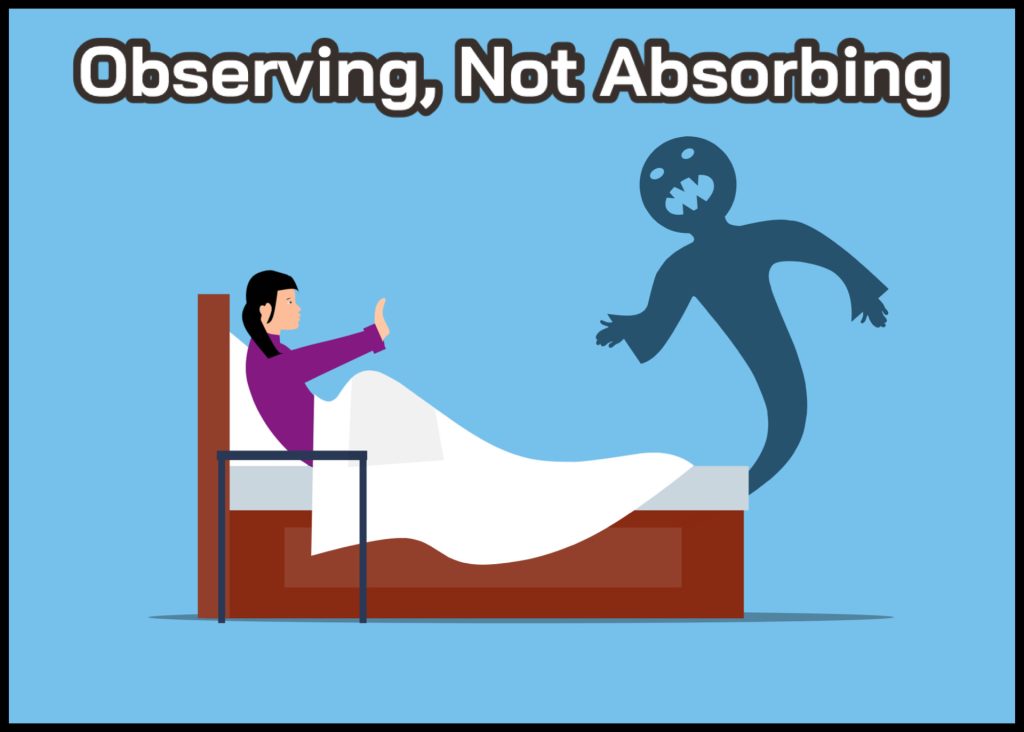
❝Search not a wound too deep lest thou make a new one.❞ – Thomas Fuller, M.D., Gnomologia (1732)
An apathetic woman will see someone’s pain and say to herself, “not me…not my problem.” An empathetic woman will see someone’s pain and say to herself, “me…my problem.” The first stance is clearly more mean spirited than the second – but I submit to you that neither stance is healthy. We must guard against caring too little; we must also guard against caring too much. But is it even possible to care too much? Hear me out: if you are internalizing someone else’s pain to the point that you are adopting it as your own, then yes. You have crossed the boundary from observing their suffering into absorbing their suffering. This is a grave mistake for any empath. For where there was originally only one wounded individual, now there are two. And instead of using your gift of empathy to act as a physician, you have inadvertently become another patient in need of healing.
When you absorb another person’s pain, the distinction between you and them grows fuzzy. Their grandfather died? It’s as if your own dear old grandpa departed this world. Their spouse left them? It’s as if your own heart is splitting from the betrayal. Their baby is in the NICU? It’s as if you are seeing your own little darling fighting for their life. This level of connection to another human being’s grief can take an enormous toll on your emotions and leave you reeling for days. And in this digital world where you can be exposed to human suffering around the clock, you can quite easily spend the rest of your life wallowing in miseries that are not your own. That is, unless you can learn to stop absorbing and start observing.
Healthy empathy is when you see someone hurting and you feel for them. Unhealthy empathy is when you see someone hurting and you feel it for them. (That little word “it” makes all the difference.) In the first scenario, your feelings lead you to be an emotional support for the vulnerable. In the second, your feelings lead you to be vulnerable and in need of emotional support. This latter response isn’t at all beneficial for the person you are empathizing with. Someone who is hurting needs you to see them, not be them. Whenever I spiral into hyper-empathy, I have to remind myself of this powerful truth: “this is not my burden to carry.” (Don’t think me to be insensitive; in our next point, we will discuss practical ways to help the burdened.) A seasoned empath will always hold a wee bit of distance between herself and the object of her empathy. She recognizes that everyone has personal trials they must go through…an unfortunate consequence of living in a fallen world. She feels genuine compassion, yet resists the urge to be consumed by grief. She places a limit on her emotional involvement, knowing that she must conserve some strength to face her own giants.
In Galatians 6:2, Paul tells us to “bear one another’s burdens“. A mere 3 verses later, in Galatians 6:5, Paul tells us that “each one will bear his own load“. I reckon this is neither accident nor contradiction. Paul is exhorting us to be balanced – to find the sweet spot between a deficit of emotion and a surplus. To be able to delineate between “my own load” and “another’s burden“. To stand back and observe whether we should assist with another’s burden, or if someone else should assist, or if the object of our empathy must carry it on their own. And this brings us to our next point.
Secondly, healthy empathy means…
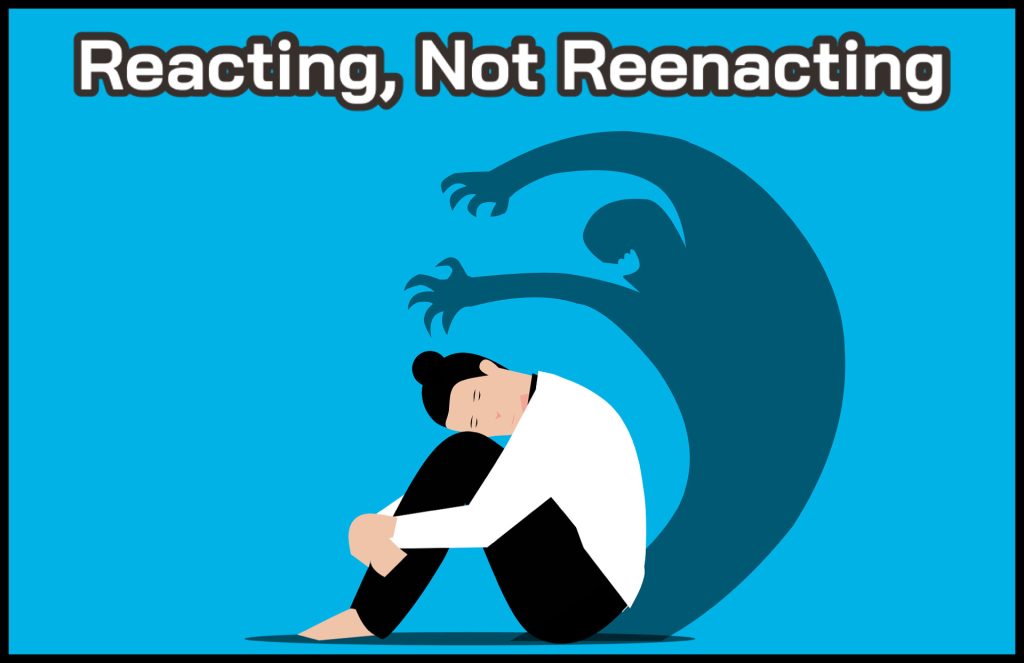
❝For there is nothing heavier than compassion. Not even one’s own pain weighs so heavy as the pain one feels with someone, for someone, a pain intensified by the imagination and prolonged by a hundred echoes.❞ – Milan Kundera
Empathy is a gift, insomuch as it compels us to relate with and provide comfort and care to the hurting. But oh, the weight of compassion without an outlet. If you don’t rise up and do something on account of your empathy, personal suffering is unavoidable. You will replay miserable scenes in your head again and again, making yourself sick with worry, fear, anxiety, and grief. This is called “empathic distress”, and it is the direct result of absorbing someone else’s pain. Empaths weren’t created to be surrogate sufferers. As we mentioned in our previous point, you falling apart won’t help the object of your empathy. They don’t need you reenacting their pain in your mind. They need you reacting to their pain in your movements!
There is no cure for empathic distress so effective as service. When you observe someone’s pain and react to it by helping them, it’s as if your empathy moves from your heart to your hands. Empathy is akin to energy…it wants to escape your body. It wants action. It wants to be set free. Harness that empathetic energy and use it for helping people. God gave you a tender heart so that you could be a blessing to others. When you are a witness to pain, ask yourself: “is this a burden I can help carry?” If the answer is yes, consider in what ways you can be of service. It might be offering a tender word of consolation, in person or in writing. Extending a listening ear, or providing a shoulder to cry on. Giving a hug, a squeeze on the arm, or a brush on the cheek. Cooking a savory meal, or baking a sweet treat. Scheduling a visit to the hospital or nursing home. Speaking a needed piece of advice, or instilling a boost of confidence. Lending a helping hand around the house or yard. Covering an expense, or making a donation. The list goes on, for there are numerous ways that you can show up for the burdened. Romans 12:15 exhorts us to “Rejoice with those who rejoice, and weep with those who weep“. Do you notice how it says “with“? Not “on behalf of“, but “with“. It’s an individual’s job to process their emotions; it’s our job to come alongside them and show compassion. Healthy empathy will move us to serve; unhealthy empathy will move us to suffer. If you go home at the end of the day and reenact someone else’s pain, dwell on someone else’s troubles, concentrate on someone else’s grief…it’s too much. Your emotions, in some twisted way, have become more about you, and less about them. We must control our empathy by looking outward, not inward. We must guide our intense feelings to fulfill their intended purpose: to travel out from our hearts and into our hands.
Now, there are some instances in which we –for some reason or another– simply cannot help carry another’s burden. In Romans 15:1, we are informed that “we who are strong ought to bear the weaknesses of those without strength.” I want to draw your attention to who ought to bear the weaknesses of those without strength. “We who are strong“, the scripture reads. Not everyone is strong, and certainly no one is strong in every area. Therefore, some burdens will be too heavy for us to help lift. In the same way that a woman may find herself too weak physically to help her husband carry a heavy piece of furniture, we may likewise find ourselves too weak (emotionally, intellectually, financially, spiritually, etc.) to help an individual who is struggling. The most helpful thing we can do in such a situation is to acknowledge and accept our inadequacy, directing the person to someone (or Someone) stronger than ourselves and thus more properly outfitted for the task at hand. And that’s what our next point is all about.
Thirdly, healthy empathy means…
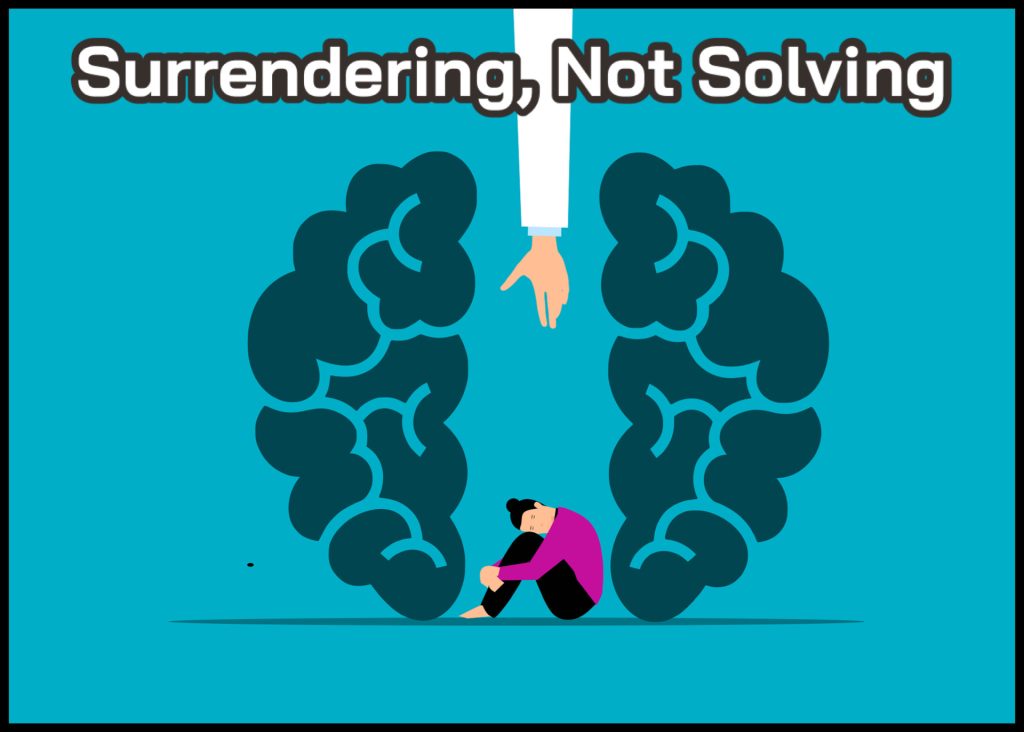
❝A sympathetic person is placed in the dilemma of a swimmer among drowning men, who all catch at him, and if he gives so much as a leg or a finger, they will all drown him.❞ – Emerson, “Experience,” Essays: Second Series (1844)
What can you do when any attempt to rescue the “drowning” would only drag you down to your death? What can you do when poor souls “catch at” your heartstrings, but you simply cannot save them? What can you do when you yearn for a solution, but there is none to be found? It’s times like these when the empath must learn the art of surrender…for not every problem can be solved. Not every hurt can be healed. Not every burden can be lifted. Not every broken thing can be fixed. At least, not by us! We must come to terms with the fact that we are not in control…God is. No matter how much empathy we experience for someone, we can find peace knowing that He sees and loves that person even MORE than we do.
If you find yourself unable to provide the relief you wish you could for a burdened individual, your first step should be to find someone else who might be of service. Perhaps someone who has more wisdom/maturity, time/energy, money/connections, etc. There is no shame in admitting when you are not the right person for a job. Far better for you to refer the object of your empathy to someone who can help properly, rather than for you to help poorly. People who endeavor to carry burdens that are too heavy for them end up dropping their side of the load, injuring themselves and their moving partner in the process. It is wise to let a stronger person step in and do the heavy lifting when a weight is beyond your ability to carry.
Now, to reiterate: there are some burdens that we can help carry, and there are some burdens that we can find someone else to help carry. There also remains one more variety: the burdens that an individual must carry alone. These burdens are often those that plague the heart and mind. (i.e. depression, anxiety, loss, betrayal, etc.) In such instances, we may be able to provide some comfort, but only God can provide the cure. The most powerful thing we can do for people with internal struggles is to intercede for them with prayer. I am reminded of an inspiring scene in The Lord of the Rings: The Return of the King (both in the book and the film), in which the character Samwise Gamgee finds himself at a loss on how to assist his friend and master, Frodo Baggins, with a burden that only Frodo can carry. Thinking outside the box, Samwise hoists Frodo over his shoulder and says this iconic line: “I can’t carry it for you…but I can carry you!” What a great reminder – even when we can’t lift the burden, we can always lift the burdened (read: in prayer). Healthy empathy is trusting God to make things right; unhealthy empathy is trying to fix everything by our own strength.
Take a few moments to read David’s example of surrender from 1 Samuel 12:15b-23:
“Then the Lord struck the child that Uriah’s widow bore to David, so that he was very sick. David therefore inquired of God for the child; and David fasted and went and lay all night on the ground. And the elders of his household stood beside him in order to raise him up from the ground, but he was unwilling and would not eat food with them. Then it happened on the seventh day that the child died. And the servants of David were afraid to tell him that the child was dead, for they said, ‘Behold, while the child was still alive, we spoke to him and he did not listen to our voice. How then can we tell him that the child is dead, since he might do himself harm!’ But when David saw that his servants were whispering together, David perceived that the child was dead; so David said to his servants, ‘Is the child dead?’ And they said, ‘He is dead.’ So David arose from the ground, washed, anointed himself, and changed his clothes; and he came into the house of the Lord and worshiped. Then he came to his own house, and when he requested, they set food before him and he ate. Then his servants said to him, ‘What is this thing that you have done? While the child was alive, you fasted and wept; but when the child died, you arose and ate food.’ And he said, ‘While the child was still alive, I fasted and wept; for I said, ‘Who knows, the Lord may be gracious to me, that the child may live.’ But now he has died; why should I fast? Can I bring him back again? I shall go to him, but he will not return to me.’“
David was overcome with empathy for his sick baby, but there was nothing in his own power he could do to save the child’s life. So David devoted himself to prayer and fasting, in hopes of garnering the Lord’s favor. Ultimately, God did allow the baby to perish, and David’s empathy appears to have died that same day. We, like David’s servants, may find ourselves a bit flabbergasted at David’s seemingly cavalier response to his baby’s death. But I would suggest that David had an exceedingly healthy sort of empathy – he understood that when you cannot solve it, you have to surrender it.
In conclusion…
Healthy empathy means observing, not absorbing. It means reacting, not reenacting. It means surrendering, not solving.
At times, being an empath can feel more like a curse than a gift. A sad song can wind it’s way into your psyche and put you into a funk. A sad book can touch your soul and leave you with tear-stained pages. A sad movie can play with your emotions and cause you to identify with a tormented character. A sad little girl at a candy machine can break your heart and leave you forever hoping that her life is filled with joy and love. But having the sensitive heart of an empath isn’t a bad thing…if you are careful to practice healthy empathy. Did you ever stop to consider that our Savior is the empath of all empaths? We all know John 11:35, the shortest verse in the Bible: “Jesus wept.” But why did He weep? Jesus’ emotional display came on the heels of His friend, Lazarus, dying. If you know the account, you know that Jesus resurrected Lazarus on the very same day that He wept over his death. Typically, people weep over a “goodbye“, not a “see you later“. I don’t think Jesus was weeping for Himself, nor was He weeping for Lazarus. No, I think that He was weeping out of empathy for Lazarus’ grieving loved ones. Let’s read John 11:35 in context, beginning with vs. 33-34:
When Jesus therefore saw her [Lazarus’ sister, Mary] weeping, and the Jews who came with her, also weeping, He was deeply moved in spirit and was troubled, and said, “Where have you laid him?” They said to Him, “Lord, come and see.” Jesus wept.
The King of Kings allowed Himself – for a brief moment in time – to feel someone else’s pain. Yes, I do believe Jesus was an empath. Scratch that – Jesus is an empath. He felt Mary’s pain. He felt the Jews’ pain. He feels the object of your empathy’s pain. He feels my pain. And he feels your pain.
For we do not have a high priest who cannot sympathize with our weaknesses… – Hebrews 4:15a
Jesus’ gift of empathy compelled Him to breathe new life into Lazarus. May our gift of empathy compel us to breathe life into others, also!
Tenderhearted friends, let’s keep feeling, without falling.
For God’s glory,
Mrs. Dustin Bolks
Chaste Bolks is a church of Christ preacher’s wife, living in Northwest Iowa. She began her monthly blog, Destress the Damsel, in January of 2014. Her favorite things include unlocking truths from God’s word, spending time with her husband, playing with her kitties, reading a quality book, watching a wholesome movie, mastering a retro video game, keeping house, and soaking up the sunshine. She is passionate about sharing Biblical Womanhood in the hopes that some woman, somewhere, will be better for it.