Listen, Sister!
by 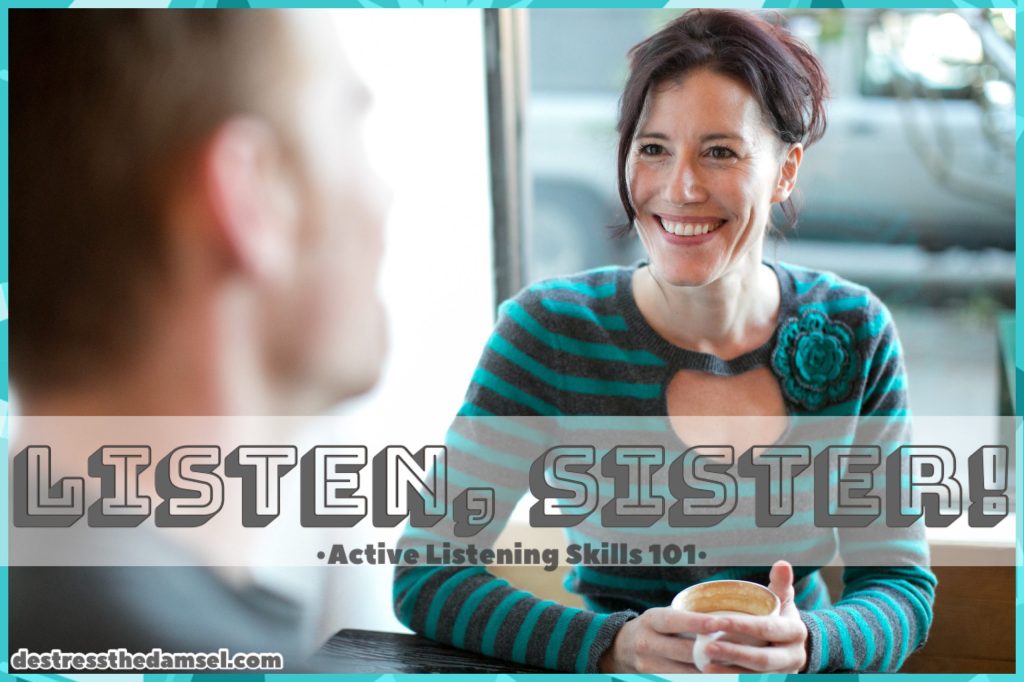
by
Franklin Delano Roosevelt, who often endured long receiving lines at the White House, complained that no one really paid any attention to what was said. He suggested people often respond superficially to shocking or unexpected statements, indicating a tendency to avoid deep engagement in conversations, choosing rather to be unreceptive than process the information.
One day, during a reception, he decided to try an experiment. To each person who passed down the line and shook his hand, he murmured, “I murdered my grandmother this morning.”
Most attendees did not react to his unusual statement and instead offered standard polite responses, “Marvelous! Keep up the good work. We are proud of you. God bless you, sir.”
It was not till the end of the line where only one person, the ambassador from Bolivia, acknowledged the statement, responding with, “I’m sure she had it coming.”
Myth or fact? Did the former president truly run this outlandish experiment on his constituents? Well, like the popular story about a young George Washington cutting down his father’s cherry tree, it is unclear whether this oft-repeated anecdote about FDR actually occurred. One way or the other, there’s a lesson in the legend: active listeners are a rare breed. Most people only half-listen at best, and some will even zone out completely when others are talking. Christians should be the exception to that rule. We ought to resemble the open-eared and quick-witted ambassador from Bolivia. As a people known by our love (John 13:35), it’s important that we show people we care by giving them our full attention when they speak.
Listen, Sister! Today, we’re going to learn the three skills required of an active listener. Now you may be thinking, “but I’m naturally a Chatty Cathy! It’s who I am. I’ll never be the ‘active listening’ type…it’s just not a part of my personality.” Here is what James 1:19 has to say: let everyone be quick to hear. Did you catch who should be quick to hear? Everyone. Yes, even the one who is a natural born “Chatty Cathy”. You may be an extrovert. You may love to tell a good story. You may enjoy getting on a soapbox from time to time. And none of these things are wrong! But what is wrong is when you allow your outgoing personality to prevent you from actively listening to others; when you let someone’s words be wasted on you as they travel in one ear and out the other; when you are primarily you-focused instead of them-focused; when you are all about responding instead of receiving.
Since everyone must be quick to hear, let’s waste no time in learning Active Listening Skill #1:

Do not merely look out for your own interests, but also for the interests of others. – Philippians 2:4
Have you ever had the misfortune of conversing with someone who was highly distracted? Perhaps they permitted their young child to repeatedly interrupt your conversation, or their eyes kept wandering off to something or someone in the distance, or, horror of horrors, they flipped out their phone and scrolled or texted or maybe even answered a phone call. If you’ve been in one of these scenarios, I’d venture to guess that you left the conversation feeling hurt, irritated, and a bit confused. “Am I really that much of a bore?” you wondered, “They didn’t listen to a single word I said!“
It crushes the self-esteem of others when we are not engaged in conversation. When someone is speaking to you (barring an emergency) strive to eliminate all distractions. If you have a young child that is inclined to interrupt, train that child to wait patiently until he or she is acknowledged and given the floor to speak: “Just a moment, Mr./Mrs. So-and-So is talking to Mommy. Wait your turn to talk. There’s a good boy/girl.” If you see/hear something so fascinating in the distance that you can’t resist giving it your attention, politely interject and invite the speaker to observe it with you: “I’m so sorry to interrupt, but look at that Model T! Haven’t seen one of those in ages. Now, picking up where we left off. You were telling me about your vacation plans?” If your phone dings, either ignore it or inform the speaker that you are going to quickly check it: “Pardon me, let me just see if this is important. Oh, it’s only my cousin asking if I’ll bring a casserole to our family reunion. I’ll text her back when I get home. Anyway, that was such a cute story about your grandson. How old is he now?” Distractions pop up sometimes. When they do pop up, always make it a point to return the conversation back to what the speaker was saying before the interruption. (When actively listening, the topic will be much easier to remember.)
One significant way to stay engaged is by maintaining eye contact. Keep your eyes trained on the speaker, and don’t attempt to take in all the sights around you. Another significant way to stay engaged is by maintaining ear contact. Keep your ears attuned to what the speaker is saying, and don’t listen in on outside conversations. Another significant way to stay engaged is by maintaining brain contact. Keep your mind focused wholly on the conversation at hand, and don’t allow your thoughts to drift away towards tonight’s meal, tomorrow’s activity, or what you want to say next. Being an active listener comes down to following the Golden Rule. Do you want people to pay attention to you when you speak? Pay attention to them!
❝Just as soon as we notice that someone has to force himself to pay attention when dealing and talking with us, we have a valid demonstration that he does not love us or that he does not love us anymore.❞ – Friedrich Nietzsche
Since everyone must be quick to hear, let’s waste no time in learning Active Listening Skill #2:

Rejoice with those who rejoice, and weep with those who weep. – Romans 12:15
Have you ever had the misfortune of conversing with someone who was emotionally detached? They were looking right at you, but with a plastered on expression. They were nodding their head at intervals, but it seemed robotic. They were saying things like, “yeah…hmm…true…interesting“, but they sure didn’t appear all that interested. They were with you, but they weren’t with you. They weren’t matching your energy. You probably walked away from that conversation feeling depleted, because it was all give and no take. You poured out your enthusiasm and they poured out…nothin‘.
It crushes the spirit of others when we are not enthused in conversation. Just as much as people don’t enjoy talking to those who are distracted, they also don’t enjoy talking to those who are apathetic. Conversations are about forming connections, and not simply going through the motions. Active listening involves building empathy for the person talking to you. Don’t just look at the speaker…truly see them. Don’t just nod your head repeatedly…search for genuine points of agreement. Don’t just blurt out words in order to fill the air…provide thoughtful responses. Maybe you’re not ultra excited about what the other person is saying, but that’s where empathy comes in. You have to put yourself in the other person’s shoes and “rejoice/weep” with them accordingly. Are you talking to someone who is rattling on and on about college football? Maybe you’re not all that interested in the topic, but you are interested in cross-country skiing. You have to remember that if you were talking about cross-country skiing, you would be just as hyped up as the other person is about college football. You know what it is to be excited, even if your interest differs from theirs. So “rejoice” with them! Are you talking to someone whose cat just died? Maybe you’re a dog person, and you don’t give two hoots about cats. But wouldn’t your heart ache if your dog died? You know what it is to be sorrowful, even if your heartache differs from theirs. So “weep” with them!
Now, there’s no two ways about it: you can’t be enthusiastic towards the person talking to you if you don’t care about the person talking to you. If you find yourself unaffected by the joys and sorrows of others, it points to a lack of love for your fellow man. Apathy is a serious heart problem that must be acknowledged and addressed. Also, unless you happen to be a professional actor or experienced con artist, your disinterest in conversation is going to be as plain as the nose on your face. People instinctively know when you’re not connecting with them. The more apathetic you are, the less people want to talk to you. The less people want to talk to you, the more apathetic you will become. Open your heart to avoid this vicious cycle.
❝To listen closely and reply well is the highest perfection we are able to attain in the art of conversation.❞ – La Rochefoucauld, Maxims (1665)
Since everyone must be quick to hear, let’s waste no time in learning Active Listening Skill #3:

A man has joy in an apt answer, and how delightful is a timely word! – Proverbs 15:23
Have you ever had the misfortune of conversing with someone who was basically unresponsive? You tried asking them a question, and they only supplied a one word answer. You tried making a joke, and they just smiled awkwardly. You tried getting them fired up about a topic you knew them to be passionate about, and they didn’t take the bait. It wasn’t that they were distracted, and it wasn’t that they were apathetic, but still you found that your time with them was not all that enjoyable. Why? Because you were forced to carry the whole conversation due to their (extreme) reserve.
It crushes the stamina of others when we do not allow ourselves to be enjoyed in conversation. Many assume that being an active listener involves remaining totally silent while allowing other people to do all the talking, but that is simply not true. Though you might have good intentions – even regarding your silence as the offering of a humble heart – it can actually be a real burden to your companion. In truth, he/she is liable to lose steam pretty fast when attempting to carry a one-sided conversation. Active listening doesn’t mean that you can only listen and never speak. Reservedness is certainly a gentle, lovely, womanly trait, but it can be overdone. While some women go to the extreme of monopolizing conversations, still others over-correct and go to the opposite extreme of monkish silence. Extremes are rarely the answer in any situation. Instead, look for a healthy balance. Practice speaking and listening in appropriate measures: it has often been said that we should speak 20% of the time in group conversation, and 50% of the time in one-on-one conversation. So…don’t be a loud mouth schnook, but don’t be afraid to let your voice be heard. Share some of your wisdom. Share some of your passions. Share some of your life. Remember, other people should be given an opportunity to be active listeners, too!
Now, if your reserve stems from a place of genuine shyness, then that is a whole different ballgame to overcome. Different, but not impossible. The best remedy I know to battle shyness is to get your mind off of yourself and onto others. The more absorbed you are in another person, the less you care about what you look like, how you sound, the way you come across, etc. Shyness is usually triggered by focusing on ourselves way too much. Or maybe you are not shy, but your reserve stems from a place of simply not knowing what to talk about. This can indicate a need for personal growth. Educate yourself! Try a new hobby! Learn a new skill! With self-improvement, you will never run out of interesting things to share in conversation.
❝A man who listens because he has nothing to say can hardly be a source of inspiration. The only listening that counts is that of the talker who alternately absorbs and expresses ideas.❞ – Agnes Repplier, “The Luxury of Conversation,” Compromises (1904)
In conclusion…
Are you ready to become a more active listener? Then you must adopt these three skills:
I. Be Engaged. Don’t be highly distracted. Listen up!
II. Be Enthused. Don’t be emotionally detached. Perk up!
III. Be Enjoyed. Don’t be basically unresponsive. Speak up!
Listen, Sister! Do you have ears? Jesus says to…
Take care how you listen. – Luke 8:18a
For God’s glory,
Mrs. Dustin Bolks
Chaste Bolks is a church of Christ preacher’s wife, living in Northwest Iowa. She began her monthly blog, Destress the Damsel, in January of 2014. Her favorite things include unlocking truths from God’s word, spending time with her husband, playing with her kitties, reading a quality book, watching a wholesome movie, mastering a retro video game, keeping house, and soaking up the sunshine. She is passionate about sharing Biblical Womanhood in the hopes that some woman, somewhere, will be better for it.

Leave a Reply