L’Enfant L’Enchante: Madness & Sadness
by 
She is not fair to outward view
As many maidens be,
Her loveliness I never knew
Until she smiled on me;
O, then I saw her eye was bright,
A well of love, a spring of light!
But now her looks are coy and cold,
To mine they ne’er reply,
And yet I cease not to behold
The love-light in her eye:
Her very frowns are fairer far
Than smiles of other maidens are.
– Hartley Coleridge
What unique quality does Mr. Coleridge’s sweetheart possess that leaves him so captivated? It certainly isn’t her good looks, as he freely admits to the plainness of her features in the opening line of his poem. A beauty queen this woman is not! Yet in spite of a nondescript appearance, she has a powerful hold over her man’s heart. Whether she smiles or frowns, he is smitten by her. Why is this?
I suggest to you now that Mr. Coleridge’s “intended” is in possession of a childlike spirit. Now, if you have yet to read last month’s article, L’Enfant L’Enchante: Wonder & Whimsy, I strongly encourage you to do so before proceeding with this month’s article (the second installment of a two-part series). I won’t be reviewing much of what we discussed previously, so it’s important to get some background on this potentially controversial topic before going full steam ahead. Read Part I here.
I’ll wait…
Did you read Part I? Great! Now we’re on the same wavelength. Allow me to remind you that the French phrase, L’Enfant L’Enchante (a rhyme that is pronounced: lahn-fahnt lahn-shahnt), is translated in English as “the child enchants him”. As we talked about in Part I of our series, a childlike spirit is enchanting to God and husbands alike. Childlikeness activates the manful drive to provide, protect, and promote the vulnerable. When we tap into our inner child, we can capture the hearts of our husbands in the way no “battle-axe”, “old-ball-and-chain”, or “strung-out and washed-out old harpy” ever could. We can, like Mr. Coleridge’s beloved, have the power to enchant with a smile or frown.
While last month’s article focused on enchanting our husbands with a smile (i.e. wonder & whimsy), this month’s article will focus on enchanting our husbands with a frown (i.e. madness & sadness). Sounds a little counterintuitive, doesn’t it? But it really works…if you go about it the right way! (The trick is to lean into childlikeness, not childishness. Remember: it’s all about emulating those positive features of children, rather than the negative features.) Next time you feel angry, let yourself be a…

What is childlike anger? It is the charming, expressive anger, spunk or sauciness of a little girl. There is no better school for learning childlike anger than watching the antics of little children, especially little girls who have been given an abundance of love. They are so trusting, so sincere, and so innocent, and yet so piquant and outspoken that they are often teased into anger. They are too innocent to feel hate, jealousy, resentment and the uglier emotions. When such a child is teased, she does not respond with some hideous sarcasm. Instead, she stamps her foot and shakes her curls and pouts. She gets adorably angry at herself because her efforts to respond are impotent. Finally, she switches off and threatens never to speak to you again, then glances back at you over her shoulder to see if you thought she really meant it, only to stomp her foot in impatience when she sees that you are not the least bit fooled.
A scene such as this will invariably make us smile with amusement. We feel an irresistible longing to pick up such a child and hug it. We would do anything rather than permit such an adorable little thing to suffer danger or want; to protect and care for such a delightfully human little creature would be nothing less than a delight. This is much the same feeling that a woman inspires in a man when she expresses anger in a childlike way. Her ridiculous exaggeration of manner makes him suddenly want to laugh; makes him feel, in contrast, stronger, more sensible and more of a man. This is why women who are little spitfires–independent and saucy–are often sought after by men. This anger, however, must be the sauciness of a child, and not the intractable stubbornness of a woman well able to ‘kill her own snakes.’
– Helen Andelin, Fascinating Womanhood
Learning to be a mad little wife when you are angry (as opposed to being a bitter, resentful shrew) will do wonders for diffusing the tension in your marriage. The rageful wife who rants and raves at her husband will be hard-pressed to get the response out of him that she desires. More often than not, a woman’s wrath only escalates the problem at hand, until husband and wife are both sorely at odds. A masculine man will typically respond in one of two ways to a raging woman: 1) show her who is boss, or 2) remove himself from her presence. Neither result is very satisfactory for that wife!
Childlike anger is a little-known, yet highly-effective method for maintaining marital harmony in the midst of injuries and offenses. Now, there are certainly times when this approach is inappropriate to the matter at hand (i.e. in response to marital infidelity, physical abuse, or other extremely injurious acts). It would be ludicrous to employ childlike anger in response to diabolical offenses such as these. I am not addressing extremes, but how to deal with your everyday, run-of-the-mill squabbles.
Notice some of the childlike tactics that Mrs. Andelin recommended in her quote above. One tactic is employing a visible response to anger. Stamping your feet, shaking your curls, pouting, etc. are all very childlike behaviors that will disarm your husband rather than put him on the defensive. A man who feels that he is being challenged will tend to view his wife as a rival, leading to a “fight or flight” response (put her in her place or evacuate the premises). It is in a man’s very nature to fend off an “enemy”…even if she is his lawfully wedded wife! It is also in a man’s nature to provide, protect, and promote. If he sees you as vulnerable rather than threatening, he will be more sensitive towards you.
The second tactic Mrs. Andelin recommended is that of an audible response to anger. A childlike exaggeration such as “I’m never speaking to you again!” will get your husband’s attention without getting his ire up. (If not spoken in earnest, of course) The sheer ridiculousness of such a statement denotes a certain “helplessness” or “impotence” that makes you appear more of a woman, and he, more of a man. If you combine visible and audible responses to anger, your husband will be so much more receptive than if you “fly off the handle” as so many women make the grave mistake of doing.
Fascinating Womanhood is chock-full of practical ideas for expressing childlike anger. One of my favorite tips is this: when describing your husband’s treatment of you, use expressions and words that compliment his masculinity. In her book, Mrs. Andelin suggested expressions such as, “you big, tough brute!” or “you stubborn, obstinate man!”, and words such as unyielding, determined, difficult, hard-hearted, inflexible, unruly, stiff-necked, indomitable, and invincible. (These examples can be adjusted to fit a more modern vocabulary if you wish. The point is to appeal to your husband’s maleness.) Many wives, when angry, will demean and belittle their husbands. I have yet to see a husband won over by such a nasty approach! But a cute, childlike, soft answer can turn away wrath.
We all get angry from time to time, but it’s how we choose to respond that makes all the difference. When we were little girls, we were “too innocent to feel hate, jealousy, resentment and the uglier emotions“. Why don’t we return to that childlike innocence? We can show fervor without ferocity. We can get our point across without blowing our top. We can get mad at our husbands without sinning against them. We can learn to release steam in a way that is innocent, healthy, and even delightful.
Let yourself be a mad little wife. You will be happier and better for it, and your husband will be happier and better for it. Childlike anger will wrap your husband around your finger. L’Enfant L’Enchante…the child enchants him!
Be angry, and yet do not sin; do not let the sun go down on your anger, and do not give the devil an opportunity. – Ephesians 4:26-27
Now let’s discuss another reason wives frown: sadness. Next time you feel hurt, let yourself be a…

The second way of being childlike is that of being hurt. The feeling of being hurt is a crushing or cutting sensation as being cut with a knife, only the wound is in the spirit rather than the flesh. When hurt, one does not feel the emotion of anger, or feel tempted to lose one’s temper. Instead, there are two tendencies–one to cry and the other withdraw. The trouble is that when tempted to cry, women usually over-react, displaying deeply wounded feelings and emotional turmoil. This can be frustrating to a man. He is often at his wits’ end to know how to comfort her. I have known men who, in their desperation, walk away and leave a woman alone due to a feeling of inadequacy as to how to handle the situation. Or when a woman reacts in an opposite way–withdrawing into her shell, she forms resentments and breaks communications. In either case there is harm to the marriage relationship.
The best way to express ourselves when hurt is to again copy the mannerisms of little children. When children are hurt, the lips quiver and a tear or two trickles down the cheeks. Or they look with downcast eyes, pout, mumble a few broken words, tremble, rub their foot along the carpet and look rather helpless in their predicament. Or, if the occasion merits it, the cry can be more expressive, with exaggerations and heaving of the breast, but with an absence of bitterness. Childlike crying is amusing and charming and arouses tenderness in men. It is a marvelous way to handle human frailties and build good marriage relationships.
When a woman reacts in a childlike way, however, she must be certain that her actions resemble the showy outbreak of a child and not the emotional turmoil of a deeply disturbed woman.
– Helen Andelin, Fascinating Womanhood
Learning to be a sad little wife when you are hurt (as opposed to becoming an emotional wreck) will do wonders for drawing the tenderness from your marriage. Most men can’t tolerate the sight of a blubbering, bawling woman. On the flip side, most men can’t resist the sight of a pitiful, pouting child. What accounts for the difference? The latter scenario, in a way, begs for a man’s help. The former scenario is, in a way, beyond a man’s help. Men are not apt to embark upon a hopeless enterprise. When a man perceives a problem as being beyond his ability to solve, he will typically respond by leaving that “unsolvable situation” alone in order to invest time and efforts elsewhere.
If you are that “unsolvable situation” in your husband’s life, you will probably find yourself unable to inspire the comfort and consolation out of him that you desire. Many men don’t attempt to soothe their inconsolable wives, because their wives are simply, well…inconsolable! Lost causes, if you will. A husband will often leave his wife to her emotions until she “comes around”, and such a man can hardly be blamed. There’s not much a guy can do for a gal who chooses to wallow in her misery!
In the quote above, Mrs. Andelin again recommended a visible response to hurt feelings. The quivering lip, the shedding of one or two tears, the downcast eyes, the pout, the tremble, the dragging foot…each one of these examples is a subtle “cry for help” meant to elicit a tender male response. Childlike hurt reveals a level of vulnerability that appeals to a man’s protective nature.
Though it’s easier to miss, Mrs. Andelin did recommend an audible response to hurt feelings, just as she did with anger. This time, she mentioned “mumbling a few broken words”. It is so important to be sparing with the words we say when our heart is hurting. Otherwise, complaints, bitterness, and resentment tend to enter the conversation…and such talk is a surefire way to repel our husbands.
Some of the childlike approaches in dealing with anger are applicable for dealing with hurt feelings, as well. Playing the victim (in a mild manner) can be charmingly childlike. Some cute phrases from the book include this one from Helen herself: “how can a great big man like you pick on a poor little helpless girl like me?” And one from a reader: “just because you’re bigger and stronger than I am you think you can push me around.” Gently reminding your man that you are the weaker vessel will not only help him remember to employ his sensitivity, but make him feel like a MAN in the process!
We all feel hurt from time to time, but it’s how we choose to respond that makes all the difference. When we were little girls, we were “expressive…but with an absence of bitterness“. Why don’t we return to that childlike innocence? We can show pain without inflicting punishment. We can feel sorrow without sinking into the depths of despair. We can have a hard moment without having a hard day. We can learn to reveal our emotions in a way that is innocent, healthy, and even delightful.
Let yourself be a sad little wife. You will be happier and better for it, and your husband will be happier and better for it. Childlike hurt will wrap your husband around your finger. L’Enfant L’Enchante…the child enchants him!
Blessed are the poor in spirit, for theirs is the kingdom of heaven. Blessed are those who mourn, for they shall be comforted. Blessed are the gentle, for they shall inherit the earth. – Matthew 5:3-5
In conclusion…
If you would diffuse the tension in and draw the tenderness from your marriage, I encourage you to reclaim the madness & sadness of your childhood. Practice showing childlike anger and childlike hurt when you are upset, and watch the hostility in your marriage become a thing of the past. To learn more about childlikeness and other groundbreaking marriage concepts found in Fascinating Womanhood, do yourself a favor and snag a copy of this very special book! You’re never too old to be a mad little wife; a sad little wife.
Cultivate a childlike spirit for your husband. L’Enfant L’Enchante…the child enchants him!
And cultivate a childlike spirit for your God. L’Enfant L’Enchante…the child enchants Him!

For God’s glory,
Mrs. Dustin Bolks
Chaste Bolks is a church of Christ preacher’s wife, and the home educating mother of two children. She and her family currently reside in Northwest Iowa.

by 
If I could see the world
Through the eyes of a child
What a wonderful world this would be
There’d be no trouble and no strife
Just a big happy life
With a bluebird in every tree
I could see right, no wrong
I could see good, no bad
I could see all the good things
In life I’ve never had
If I could see the world
Through the eyes of a child
What a wonderful world this would be
If I could see the world
Through the eyes of a child
Smiling faces would greet me all the while
Like a lovely work of art
It would warm my weary heart
Just to see through the eyes of a child
I could see right, no wrong
I could see good, no bad
I could see all the good things
In life I’ve never had
If I could see the world
Through the eyes of a child
What a wonderful world this would be
– “If I Could See The World (Through The Eyes Of A Child)” as sung by Patsy Cline (1957)
The legendary Patsy Cline, in her trademark contralto style, paid tribute to the Wonder & Whimsy of childhood. These two innocent and childlike qualities – Wonder & Whimsy – are often discarded in adulthood, having been snuffed out by the cares and toils of this world. By the time many reach middle age, they are disillusioned, weary, downtrodden, and embittered. (Goodbye pediatric joy, hello geriatric joints!) Yet Patsy reminds us that if we could only recapture some traits of our childhood, we would be happier and better for it.
One of the greatest marriage secrets I have ever learned, and the one I am going to share with you today, has to do with a wife cultivating a childlike spirit. (A childlike spirit is not to be confused with a childish spirit, which is a very different story. When someone is being childish, they are emulating the negative features of children. When someone is being childlike, they are emulating the positive features of children.) In Helen Andelin’s book, Fascinating Womanhood (a must-read!), she encourages wives to get reacquainted with the fanciful, playful, youthful parts of themselves – their inner child, if you will. She and countless women across the globe (myself included) attest to the disarming power of childlikeness on husbands. (Note for critics: this concept has nothing to do with pedophilia. I’m talking about being a childlike bride, not a child bride!) To be frank, no man wants a disillusioned, weary, downtrodden, and embittered wife. No husband is attracted to the “battle-axe”, the “old-ball-and-chain”, the “strung-out and washed-out old harpy”. But a wife who is as sweet and adorable as a little girl? Now that’s delightful. That can make a man’s heart of stone melt right into butter.
In this month’s article, L’Enfant L’Enchante: Wonder & Whimsy, we are going to learn how to tap into two childlike characteristics that may be as dusty as your old dollhouse. The French phrase, L’Enfant L’Enchante (a rhyme that is pronounced: lahn-fahnt lahn-shahnt), is translated in English as “the child enchants him”. See, men are designed by God to be protectors, providers, and promoters. As such, they are deeply attracted to the vulnerability of those under their wing…the vulnerability that activates their innate masculine heroism. Since men are created in the image of God, it is no surprise that Jesus Himself said, “unless you are converted and become like children, you will not enter the kingdom of heaven“. (Matthew 18:3) There is something about a vulnerable child that “disarms” the Lord of Creation. L’Enfant L’Enchante…the child enchants Him!
Do you seek to be the light of your husband’s life? Do you long for your man to treat you with the utmost tenderness? Do you yearn for your marriage to be filled with liveliness, laughter, and love? Let yourself be a…

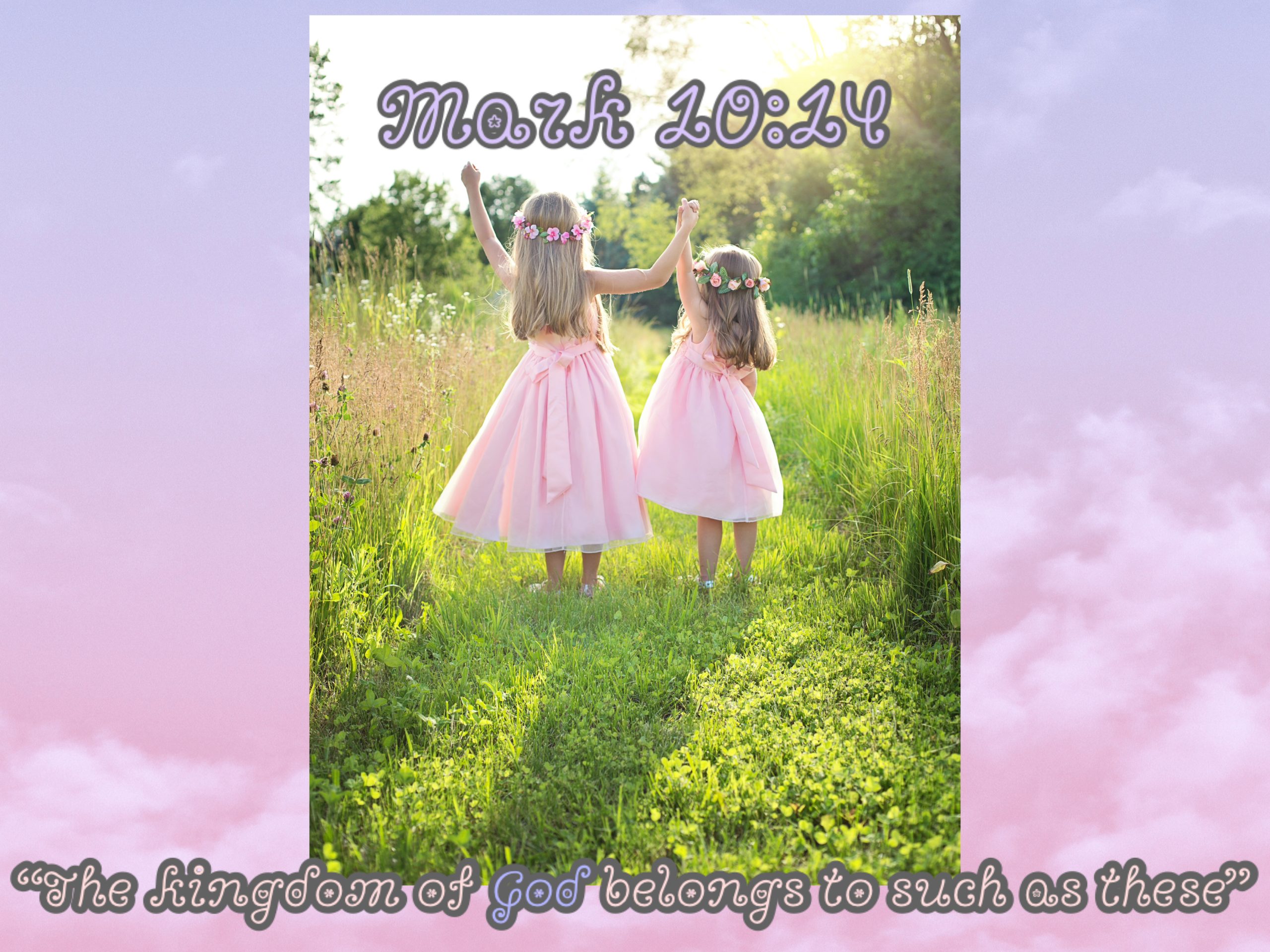
Whimsy is defined as “the trait of acting unpredictably and more from whim or caprice than from reason or judgment”. Whimsy is what makes little girls twirl around in their dresses until they fall down. Whimsy is what makes little girls pick daisies and weave them into flower crowns. Whimsy is what makes little girls skip and jump and cartwheel. Whimsy is what makes little girls sing their newly-invented songs as they play pretend.
To be a whimsical wife, one must have a little more levity and a little less gravity. Men are often burdened with full workloads, financial stresses, and familial concerns. When a man comes home to find a frazzled wife, it only adds more burden upon his shoulders. He finds no respite in “home sweet home”; he has no oasis in which to find relief from his labors. Many marriages rip apart at the seams on account of bleak scenarios such as this.
But what happens when a woman breaks the mold, and provides the gift of whimsy to her weary man? What happens when he sighs and she sings? What happens when she brings him out of his head and into her heart? She becomes his peace. She becomes his best friend. She becomes someone he can’t live without.
If you’re unsure of how to become more whimsical, try to remember what it was like to be a little girl. Little girls are the exact opposite of frazzled…they have happy-go-lucky attitudes and greet each day with a smile. Think of how a sweet little girl treats her father, and channel that energy towards your husband. When a little girl needs help with something, she doesn’t demand, nag, or cram a honey-do-list in her father’s face. She says, “Daddy will you help me? I don’t know how to do it! I’m confused!”, giving an adorable little pout. When a little girl sees her father returning home from work, she doesn’t tense up and turn away from his embrace. She says, “Daddy, will you pick me up? Give me a piggy-back ride! Spin me around!”, and squeals with delight. When a little girl sees her father’s shoulders slink after a heavy day, she doesn’t scoff at his stress and attempt to compare her plight with his. She says, “Daddy, are you okay? Don’t be sad! I love you very much!”, as she throws her arms around him in a big hug. It’s no wonder little girls have their fathers wrapped around their fingers! Their carefree spirits chase away the clouds. A whimsical wife does much the same for her husband.
Some may argue that whimsy feels disingenuous. “I am frazzled! I am strung-out and worn-out! How do you expect me to flit around like a frivolous little faerie when that’s not even close to what I’m feeling?” When I was a child, my mother was wont to say, “fake it ’til you make it”. This teaching has followed me all my life and served me well. For the non-believer, behavior follows feelings. But for the believer, feelings follow behavior! Adjust your behavior, and feelings will surely follow. Spin around with your arms out, like you did when you were a child, and see if you don’t feel a little more fanciful. Skip from one room to the next, like you did when you were a child, and see if you don’t feel a little more playful. Sing little made-up songs to yourself as you go about your day, like you did when you were a child, and see if you don’t feel a little more youthful. As you act more whimsical, you will feel more whimsical, and again start to “see the world through the eyes of a child”.
Let yourself be a whimsical wife. You will be happier and better for it, and your husband will be happier and better for it. Whimsy will wrap your husband around your finger. L’Enfant L’Enchante…the child enchants him!
A joyful heart is good medicine, but a broken spirit dries up the bones. – Proverbs 17:22
Do you seek to be the light of your husband’s life? Do you long for your man to treat you with the utmost tenderness? Do you yearn for your marriage to be filled with liveliness, laughter, and love? Let yourself be a…

Wonder is defined as “a feeling of great surprise and admiration caused by seeing or experiencing something that is strange and new”. Wonder is what makes little girls gasp with apparent surprise when opening gifts. Wonder is what makes little girls pore over storybooks for hours. Wonder is what makes little girls take their fathers’ and mothers’ hands, leading them to observe squirrels in the branches of trees. Wonder is what makes little girls recount their daily activities with wide eyes, uninhibited smiles, and expressive hand motions.
To be a wonderful wife, one must spend a little more time on reflection and a little less reflection on time. The renowned genius, Albert Einstein, once said, “He who can no longer pause to wonder and stand rapt in awe, is as good as dead; his eyes are closed.” In adulthood, life so often becomes “go, go, go” and “gotta do this, gotta do that”. Everything is a deadline, a target, a race. We are so hurried and harried that we stop taking the time to smell the flowers or feel the sun on our face. In consequence, our sense of wonder goes out the window. A woman who cannot wonder cannot experience delight. She cannot feel gratitude. Ultimately, she cannot receive. “Her eyes are closed”. Nothing stimulates her emotions; she might as well be a walking corpse.
If you know even a little about Biblical Gender Ethics, you know that one of the primary functions of a man is to give, and one of the primary functions of a woman is to receive. Our very biology reflects this foundational truth among the sexes. When a wife receives, and subsequently responds in wonder, this nurtures delight, which nurtures gratitude, which nurtures more reception. But take wonder out of the equation, and you will block the flow of masculine giving and feminine receiving that makes a marriage flourish. Face it, nobody likes giving to a sourpuss! When you respond with indifference to your husband’s gifts (whether it be compliments, or literal presents, or acts of service, etc.) he will be discouraged by your lack of appreciation and stop trying. And though it is wrong to do so, many men will abandon their wives for someone who will appreciate them. It’s not always the low blouse and short skirt that invites a man into another woman’s arms, but simply that woman’s girlish wonder, her delight, her gratitude, her reception, and marked appreciation of his good points.
If you’re unsure of how to become more wonderful, try to remember what it was like to be a little girl. Little girls are the exact opposite of indifferent…to them everything is fresh, exciting and a cause for celebration. When a little girl is complimented by her father, she doesn’t point out her flaws, tell him he needs a new pair of glasses, or accuse him of ulterior motives. She says, “Thank you, Daddy! I picked out this outfit all by myself! Today I’m being a princess.” as she offers him a low curtsy. When a little girl is presented with a gift from her father, she doesn’t say he really shouldn’t have bought it, ask if it was in the budget, or claim she could have gone without. She says, “For me?! Why you’re the best daddy in the whole wide world! It’s just what I always wanted!” with eyes lit up like so many stars. When a little girl is told a story by her father, she doesn’t watch the clock, say she’s heard it all a thousand times, or contradict the details. She says, “Daddy, tell it to me again! And don’t forget my favorite part! You tell the best stories.” while nestling into his firm chest. Receiving with a spirit of wonder, like a sweet lass, is a surefire way to keep a man giving to his wonderful wife.
Live life a bit slower and with more observation, like you did when you were a little girl. Take time to enjoy all the blessings in your life, never taking even the little things for granted. Be in awe of the life provided by God and maintained by your husband. Appreciation will help you to “see the world through the eyes of a child”.
Let yourself be a wonderful wife. You will be happier and better for it, and your husband will be happier and better for it. Wonder will wrap your husband around your finger. L’Enfant L’Enchante…the child enchants him!
Many, O Lord my God, are the wonders which You have done, and Your thoughts toward us; there is none to compare with You. If I would declare and speak of them, they would be too numerous to count. – Psalm 40:5
In conclusion…
If you would be the light of your husband’s life; if you would that your man treat you with the utmost tenderness; if you would that your marriage be filled with liveliness, laughter, and love; I encourage you to reclaim the wonder & whimsy of your childhood. You’re never too old to be a whimsical wife; a wonderful wife.
Cultivate a childlike spirit for your husband. L’Enfant L’Enchante…the child enchants him!
And cultivate a childlike spirit for your God. L’Enfant L’Enchante…the child enchants Him!
For God’s glory,
Mrs. Dustin Bolks
Chaste Bolks is a church of Christ preacher’s wife, and the home educating mother of two children. She and her family currently reside in Northwest Iowa.
by 
This morning came a man to me, his smile was wonderful to see,
He shook my hand and doffed his hat then promptly took a chair;
Said he, ‘I read your stuff each day, and I have just dropped in to say
You have a line of humor that delightful is and rare.
My dear wife reads it through and through, my aunts and uncles like it, too,
The little children cry for it when they get out of bed,
Your column’s full of common sense, your childhood verses are immense,
The equal of them, I am sure I’ve never, never read.
‘Now, you’re a man of great renown, your name is known in every town
From Boston unto ‘Frisco, from Atlanta to Duluth;
I’ve met some of our famous men, I wish to grasp your hand again;
Don’t think I flatter you, O no, I’m telling you the truth.’
I let him once more take my hand, the while I felt my chest expand,
My head began to bulge until I couldn’t wear my hat;
‘Ah me,’ I sighed, ‘ through all my days, I’ve never heard such words of praise,
I wish I knew a hundred men who’d talk to me like that.’
‘And now,’ said he, ‘ere I forget, I want to show a Balzac set
That Jolliers have printed just especially for you;
There are but twenty-six of these, observe this small prospectus, please,
This is the finest work that any publisher can do.
For you we make this sacrifice, just sixty dollars is the price,
Five dollars down and three a month—you will not miss the ‘mon.”
I signed away my salary. Henceforth, when men come praising me
I’m going to grab my hat and coat and exit on the run.
– “The Cost of Praise” by Edgar Albert Guest
“Fool me once, shame on you; fool me twice, shame on me”…and so the old adage goes. Though our narrator, a small-fry author, came out wiser in the end, he was “fooled once” when he allowed a sweet-talking salesman to compliment him right out of his hard-earned money. The author’s “bulging head” completely blinded him to the fact that he was being flattered, cheated, swindled, and bamboozled; it completely blinded him to the fact that he had become the unwitting, unfortunate victim of the sweet-talking salesman’s Pretentious Praise.
The word “pretentious” is primarily used to describe an arrogant, snobby individual. I ask you to lay aside that definition of “pretentious” for the remainder of this article, as we are instead going to be using the secondary definition of the word. See, pretension does not always speak of arrogance, but simply being full of pretense. To put it in layman’s terms, a pretentious person of this ilk is a pretender; disingenuous; someone with ulterior motives (like the salesman in our poem). It’s obvious that the salesman wasn’t complimenting the author out of a place of genuine admiration for his work, but only because he wanted to butter up a potential client. He was using a clever ruse in an effort to make a buck. His true desire was not to compliment but to cash out.
While most of us are unlikely to be taking up the role of a charlatan and tricking people into buying our wares, we must nevertheless be cautious not to give out Pretentious Praise in any way, shape, or form. Compliments Become Complicated when they are filled with false pretenses instead of heartfelt admiration. In today’s article, we are going to unveil the four types of women who give out Pretentious Praise (many times without even realizing they are doing so). By learning about these four types of women, we will be able to squash these toxic patterns within ourselves, and ensure we are not guilty of complicating our compliments.
Pretentious Praiser #1:

It is pretentious to praise someone with the ulterior motive of bragging about oneself. Boasting always makes for complicated compliments. Need help identifying The Boaster? She’s the kind of gal who says things like…
“Wow, your home is so clean and tidy. Good for you! You must be Type A, like I am. I can’t stand messy spaces. It’s good to see that there are some in the younger generation who take homemaking seriously.”
“You’re such a kind and respectful wife. That’s a rare trait in a woman! Whenever my dearly departed husband would tell me to jump, I’d ask him, ‘how high?’ Your husband is a lucky man for sure…just like my man was.”
“You have 4 children? What a busy little mother you must be! I know that my 5 always kept me on my toes. Of course, when you love kids as much as I do, it’s really no sacrifice. Raising them was a joy and a privilege.”
Complimenting another woman on her manor, marriage, and motherhood is a wonderful thing to do. Yet Compliments Become Complicated when we play the part of The Boaster. When we deliver a compliment that’s served with a side of boasting, it draws attention away from the person we are trying to compliment, and directs the spotlight onto ourselves. Instead of our praise being about her manor, her marriage, and her motherhood, it becomes about “me, myself, and I”. You might think, “I am simply being conversational. Why can’t I reveal a little bit about myself? I’m only trying to relate with her…point out what we have in common.” There are a few problems with this line of thinking. The first problem, like I mentioned previously, is that it diminishes what should have been her compliment by shifting the spotlight to you. The second problem is that comparing yourself to someone while you’re complimenting her is, indirectly, complimenting yourself. The third problem is that we are robbing the other person of the right to make her own conclusions about us…we are telling her who we are, rather than showing her who we are. The bottom line? Boasting is wrong.
The next time you wish to compliment someone, make sure to keep your praises solely about them. Ask yourself: why do I feel the need to boast? Do I want to reveal information about myself? Let the other person make that call. If they are interested in hearing more about you, they will ask. Do I want to foster a connection with someone? Let them make that call. Any logical person will be able to recognize if you and they are of a similar nature, for a genuine compliment implies shared values. Do I want to be admired? Let them make that call. The praise others give you will always be so much more meaningful than self-praise.
Don’t play the part of The Boaster. Let’s only give genuine compliments to others, not Pretentious Praise.
Let another praise you, and not your own mouth; a stranger, and not your own lips. – Proverbs 27:2
The person who sings his own praises is probably a soloist. – Unknown
Pretentious Praiser #2:

It is pretentious to praise someone with the ulterior motive of insulting someone else in the room. Roasting always makes for complicated compliments. Need help identifying The Roaster? She’s the kind of gal who says things like…
“Wow, you are such a big help! It’s too bad there aren’t more people around here with a heart for service.”
“You’re so friendly and outgoing! Not at all like those backward, fly-on-the-wall types who never speak.”
“Your children are so well-behaved! It’s a shame how some parents let their kids run around wild in public.”
Complimenting another woman on her principles, personality, and parenting is a wonderful thing to do. Yet Compliments Become Complicated when we play the part of The Roaster. When we deliver a compliment that’s served with a side of roasting, we do a disservice both to the person being complimented and to the person being insulted. 1.) We hurt the person being complimented because we are using her as a subtle (or maybe not-so-subtle) means to pick on someone else. Not only does a disingenuous compliment take away from her rightful glory, but it might even make her an object of envy and disdain in the eyes of the one she has been contrasted with. (“What makes her so perfect?” the insulted person might bitterly ask themselves.) The “complimented” is pulled into a fight that is not her own. What an uncomfortable and awkward position to put somebody in! 2.) We hurt the person being insulted because we are taking cheap shots at them. Not only is it petty and insensitive to insult someone in such a round-about way, but actually cruel and merciless… because we are not providing them with a proper platform to defend themselves. Insults are pitiful excuses for “rebukes” – if such catty behavior could even be described that way. A godly rebuke is one that is discreet and direct. Only a coward attacks someone indiscreetly and indirectly, going for the jugular with a ruthless “roast”!
The next time you wish to compliment someone, make sure to keep your praises solely about them. Ask yourself: why do I feel the need to roast? Am I unsteady about my view of this person? Gotta let it go. Chalk it up as a misconception, believe the best about her, and move on. Am I unwilling to address the matter in private? Gotta let it go. Take the proper channels for rebuke, or if you don’t have anything nice to say, don’t say anything at all. Am I taking revenge? Gotta let it go. Turn the other cheek, give it to God, and forgive her.
Don’t play the part of The Roaster. Let’s only give genuine compliments to others, not Pretentious Praise.
From the same mouth come both blessing and cursing. My brethren, these things ought not to be this way. – James 3:10
You must not pay a person a compliment, and then straightway follow it with a criticism. – Mark Twain
Pretentious Praiser #3:

It is pretentious to praise someone with the ulterior motive of getting praised in return. Taking always makes for complicated compliments. Need help identifying The Taker? She’s the kind of gal who says things like…
“Wow, your style is so cute! I dig that outfit,” with a significant pause, inviting a compliment about her outfit.
“These cookies are delicious! Your treats are the best,” with an expectant smile, as you test her baked goods.
“I feel such a connection with you! You’re my best friend,” with a big hug, welcoming you to respond in kind.
Complimenting another woman on her fashion, food, and fellowship is a wonderful thing to do. Yet Compliments Become Complicated when we play the part of The Taker. When we deliver a compliment that’s served with a side of taking, we aren’t truly admiring the other person for themselves…but only for what we can get out of them. If we give compliments in an effort to “fish for compliments“, it reveals low self-esteem. Desperate, attention-seeking energy won’t win friends! People don’t enjoy being in the presence of a “pick-me” girl (someone who lacks confidence in herself and is constantly seeking external validation from others). This is the hard truth of the matter: if you compliment people just to get complimented back, any “return” compliments you receive are likely to be from a place of sympathy rather than sincerity. On the other side of the coin, maybe you are being cornered by The Taker. How do you handle that scenario? Here’s my technique: make it your custom to never robotically return a compliment to anyone (unless you genuinely feel the same way about the other person) and instead choose to respond with gratitude and/or a different compliment. Instead of responding “you too!” to every compliment you’re given, try pointing out something unique that you genuinely like about the other person. (I.E. If she says, “cute shirt!”, you might say, “cute shoes!” If you don’t like her shirt, it’s not fair to say that you do just to be “nice”. Identify something you do like, or simply give back a heartfelt “thank you” and determine to pay her a sincere compliment on a future occasion.)
The next time you wish to compliment someone, make sure to keep your praises solely about them. Ask yourself: why do I feel the need to take? Is it because I am insecure about myself? Hold your head up. Focus on personal growth, which will build your confidence, and soon you won’t obsess so much about the opinions of others. Is it because I need to know what people think of me? Hold your head up. Don’t micromanage, allow others to “keep their own counsel” if they so choose, and assume they like you more than you know. Is it because I crave an emotional boost? Hold your head up. Find your fulfillment in Christ, take joy in the little things, and make it your mission to boost others rather than expect them to boost you. Your turn will come.
Don’t play the part of The Taker. Let’s only give genuine compliments to others, not Pretentious Praise.
And if you lend to those from whom you expect to receive, what credit is that to you? Even sinners lend to sinners, in order to receive back the same amount. – Luke 6:34
Take time to compliment people every day. Do it sincerely and with no desire to gain anything but a smile in return. – Robert Cheeke
Pretentious Praiser #4:

It is pretentious to praise someone with the ulterior motive of over-exaggerating their attributes. Faking always makes for complicated compliments. Need help identifying The Faker? She’s the kind of gal who says things like…
“Wow, you are the most breathtakingly gorgeous woman I’ve ever seen! You should go into modeling.”
“You are mindbogglingly brilliant! Doesn’t that huge brain weigh you down? Save some for the rest of us!”
“You have the makings of an all-star athlete. No seriously, have you signed up for the Olympics yet?!”
Complimenting another woman on her appearance, acumen, and athleticism is a wonderful thing to do. Yet Compliments Become Complicated when we play the part of The Faker. When we deliver a compliment that’s served with a side of faking, we are harming the recipient by encouraging them to nurture a false view of themselves. It might make them feel good in the moment to believe that they’re “the best of the best”, but dishonest feedback doesn’t do anyone any favors in the long run. Compliments only mean something when they are well-deserved. Over-the-top praises should be reserved for over-the-top exceptionalism! If every woman is breathtakingly gorgeous, where does that leave Angelina Jolie? If every woman is mindbogglingly brilliant, where does that leave Marie Curie? If every woman is an all-star athlete, where does that leave Venus and Serena Williams? If “everyone” is the best, then it stands to reason that no one is the best. In Disney Pixar’s animated film, The Incredibles, Mr. Incredible noted that “they keep creating more ways to celebrate mediocrity.” His observation was surprisingly insightful. We don’t need more proponents of the “everyone gets a prize” mentality. When mediocrity is celebrated, people naturally stop improving. If “good enough” is good enough, why would anyone bother to strive for the exceptional? We ought to compliment people in a way that is both honoring and honest. Also, better is a bit of constructive criticism than a sugar-coated praise.
The next time you wish to compliment someone, make sure to keep your praises solely about them. Ask yourself: why do I feel the need to fake? Am I sucking up to this person? Try a different approach. Give her a compliment that is ultra specific and refreshingly free of clichés. Am I latching on to a potential I see, rather than a reality? Try a different approach. Rather than acting as if she has already “arrived”, tell her about the potential you see and encourage her to continue honing her abilities. Am I trying to get others to esteem this person as much as I do? Try a different approach. People will be much more impressed by who she is than who you say she is…let her strengths speak for themselves, and be modest and realistic when praising her.
Don’t play the part of The Faker. Let’s only give genuine compliments to others, not Pretentious Praise.
They speak falsehood to one another; with flattering lips and with a double heart they speak . – Psalm 12:2
Although a skillful flatterer is a most delightful companion if you have him all to yourself, his taste becomes very doubtful when he takes to complimenting other people. – Charles Dickens
In conclusion…
Complimenting others is a wonderful thing to do. Yet there are right and wrong ways to pay compliments.
When you pay a compliment, don’t play the part of The Boaster. Make sure you’re shining the spotlight on the person being complimented…not on yourself. Don’t play the part of The Roaster. Make sure you’re not using the person being complimented in an effort to poke at someone else. Don’t play the part of The Taker. Make sure you’re not using the person being complimented in an effort to fish for return compliments. Don’t play the part of The Faker. Make sure you’re being realistic about the person being complimented…not trying to make them feel good about qualities they don’t actually possess. Compliments Become Complicated when we give out Pretentious Praise, for such fruitless “compliments are only lies in court clothes.” – John Sterling
On the other hand…
Like apples of gold in settings of silver is a word spoken in right circumstances. – Proverbs 25:11
For God’s glory,
Mrs. Dustin Bolks
Chaste Bolks is a church of Christ preacher’s wife, and the home educating mother of two children. She and her family currently reside in Northwest Iowa.